
If we could wave a magic wand to change one thing, we’d rid humanity of its natural affinity to Malthusian ideology. There’s just something oh so seductive about the idea of man being a parasite to Mother Nature. No matter how often and vigorously Thomas Malthus’ ideas are proven wrong, they keep popping up like moles in a game of whack-a-mole.
The parasite-consumer view of mankind leads directly to the anti-development society that we live in today. This is quite an ironic state of affairs considering that our ability to survive and thrive as a species literally depends on development. It depends on, as Alex Epstein likes to say, turning a naturally dangerous world into an unnaturally safe world.
Many people in Western society think electricity comes from a light switch. We don’t think you need to be able to explain exactly how the grid works, but you sure as hell better appreciate it. The more disconnected we are from what makes modern life possible, the more seductive Malthusian anti-development ideology becomes.
To make matters worse, climatism has burst onto the scene over the past two decades. In this pseudo religion, climate change is everything and the only thing. There’s no manageable risk, only runaway crisis. Luckily for Malthusians looking for friends, the first commandment of climatism is thou shall not impact nature. If we stop developing, we’ll save ourselves from ourselves. Because of this similarity, we refer to Malthusian and climatism ideology under the same umbrella term: radical environmentalism.
Radical environmentalists have planted their flag firmly on planet renewables. This isn’t to say that every person that supports solar and wind is a radical environmentalist. Far from it. However, as evidenced by the ongoing LNG export debacle, radical environmentalists punch above their weight from a lobbying/political perspective. Understandably so. If you were convinced that humanity or the planet was in dire straits, you might care a bit more about calling your elected officials.
If you put aside the fact that they often advocate against renewable energy projects due to their anti-development tendencies (lolz), radical environmentalists have been tremendously successful in changing the public narrative around energy. So much so, that it’s almost as if reaching “100% renewable energy” is a forgone conclusion of our future — it’s just a matter of how long it’ll take to get there. With this public support, they’ve been able to push for market distortions that support their vision of a “green energy” future. As one former FERC commissioner put it:
Hundreds of billions in favored federal tax treatment and subsidies for renewable[s] . . . is more than a thumb on the scale of energy markets, it is a twelve-ton dump truck.
These market distortions are forcing reliable, dispatchable power generators to retire prematurely and are creating a new type of grid reliability concern: resource adequacy. Unlike reliability issues from force-of-god storms that down power lines, resource adequacy refers to the concern that we simply won’t have enough power generation capacity to meet demand. In a recent report, the North American Electric Reliability Corporation noted that most regions of the country face growing risks of inadequate electricity supplies during periods of extreme weather over the coming decade.
Grid reliability concerns are a massive headwind for renewable energy and any radical environmentalist with half of a brain knows it. If the public begins to associate renewables with a fragile electric grid, all of those market distortions will be tossed to the curb in short order. It stands to reason then that radical environmentalists will fight tooth and nail against a) the perception that renewables are the root cause of reliability issues and b) anything that degrades grid reliability even further.
So then, what’s the biggest threat to reliability? Demand growth. The faster load grows on the grid, the faster the lack of reliable generating capacity will become apparent.Robert Bryce’s recent piece on the electrify everything movement summarized the situation well (emphasis added):
…the electrify everything movement could result in enormous reductions in the affordability, reliability, and resilience of our electric grid. The campaigners want to add massive amounts of new load onto an energy network that is already cracking under existing demand. Indeed, the electrify everything jihadis are pushing for the electrification of heating, transportation, and industry at the very same time that numerous policymakers and regulators are warning about the declining reliability of the power grid.
And with that we turn to Bitcoin mining.
Bitcoin mining requires a large amount of computational power to validate and add transactions to the blockchain. The mining process is a critical aspect of the decentralized nature of Bitcoin and the computation involved leads to significant electricity consumption. This has, predictably, led to pushback from radical environmentalists.
If we take a step back for a second and think about this logically, who cares how much energy Bitcoin mining consumes?? If you care about that, why don’t you care about how much energy is consumed to binge watch streaming shows? The fact that there’s a negative perception against Bitcoin’s energy usage tells you everything you need to know about the difficulty of killing anti-energy Malthusian ideology.

The negative perception also stems from a misunderstanding of what it takes for miners to tap into the grid. We imagine that our energy illiterate society thinks of the grid like a house with outlets. In that mental framing, Bitcoin miners might as well be walking around plugging themselves into giant outlets as they so choose, taking electricity away from Grandma in the process.
In reality, miners have to work in close coordination with utilities to connect to the grid. In cases where the facility doesn’t have immediate access to power, there can be an arduous, multi-year process to upgrade or construct equipment to service the new load. If you think Bitcoin miners work against the grid, then you think any facility that works through this process does as well — new hospital buildings, EV charging stations, etc.
Nonetheless, the sentiment against Bitcoin mining continues to grow. The Energy Information Administration (EIA) isn’t helping. Last week, the EIA started an “emergency data collection initiative” targeted at Bitcoin mining operations in the US. “Data collection initiative” seems boring and benign, but it’s not difficult to read through the lines — Bitcoin mining’s electricity usage is being singled out as a threat to grid stability.
Before receiving the requested data, the EIA issued a preliminary estimate that cryptocurrency mining represents 0.6% to 2.3% of U.S. electricity consumption. Traditional media and energy experts then wrote about this in a passive aggressive, oh-this-is-interesting-looky-here tone. With this data in tow, radical environmentalists are ramping up their advocacy machine against Bitcoin mining.
It might surprise you, but we think this budding conflict is a good thing. It’s a good thing because it exposes more people to the lunacy of radical environmentalism.
Let’s destroy the resiliency and reliability of the electric grid while simultaneously putting more pressure on the grid. To top things off, we’ll decide who is and isn’t allowed to use electricity because we’re the smart ones.
It’s crazytown, USA.
We’d venture to guess that there are a lot of Bitcoin aficionados turned reluctant grid experts out there. More and more entrepreneurs and individuals will follow this novice-to-energy-expert path because the pursuit of prosperity is a relentless pursuit of more energy.
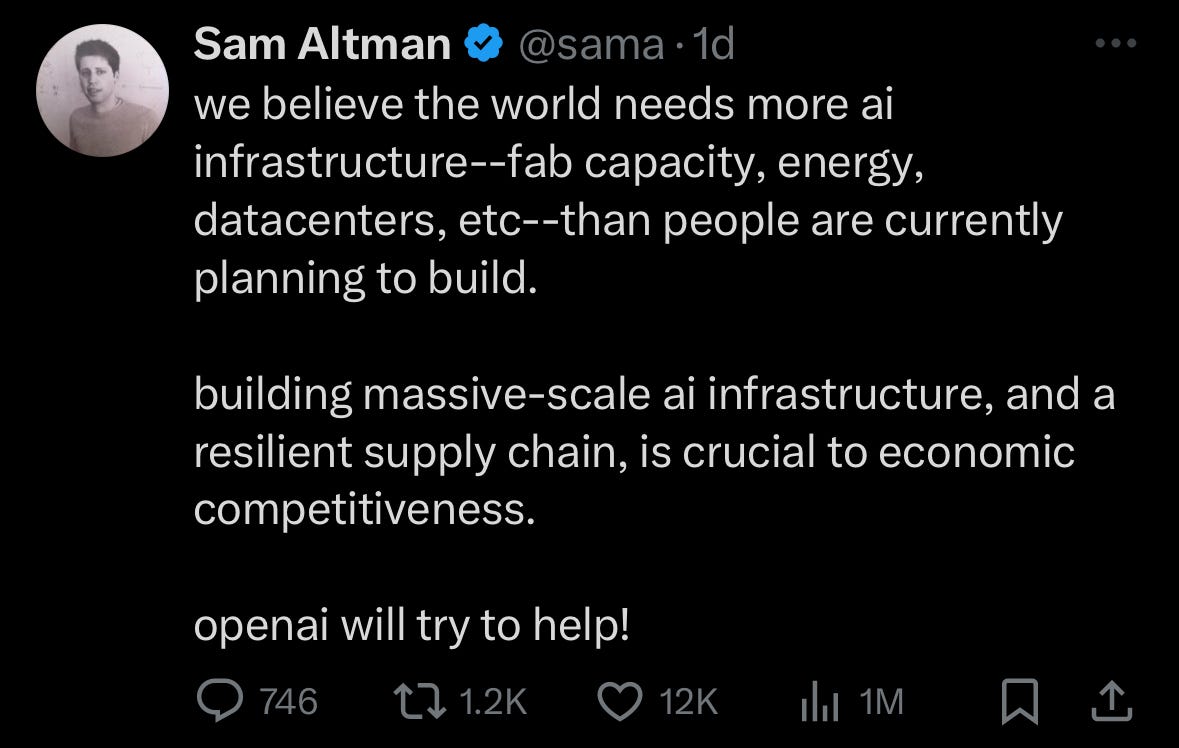
There will be a growing war for power (political and electrical) between radical environmentalists and pretty much everyone else in society. For radical environmentalists, it’s a multi-front war against progress. Not sure about you, but sure sounds like a losing battle to us.
Note: We don’t have a personal stake or well-informed opinion on Bitcoin itself, so our perspective on this issue is solely influenced by our energy views.
Excellent! Kudos! You hit the nail on the head...the Green Blob religion must trend towards the control and minimization of energy consumption by mankind. This desired objective of the Green Blob will not change, regardless of where that energy comes from, nor its form. The Green Blob religion sees mankind's use of energy as a defilement of Gaia, hence any impact of Gaia is a moral transgression. If tomorrow someone invented a cheap, fully "sustainable", power dense, non-CO2 emitting, dispatchable power source, the Green Blob would double down on their zeal to kill it, to control it, to be the decider of who is worthy of utilizing that new power.
One need look no further than this statement from one of the moron saints of the Malthusian philosophy, Paul Ehrlich:
In fact, giving society cheap, abundant energy at this point would be the moral equivalent of giving an idiot child a machine gun. With cheap, abundant energy, the attempt clearly would be made to pave, develop, industrialize, and exploit every last bit of the planet—a trend that would inevitably lead to a collapse of the life-support systems upon which civilization depends.
https://en.wikiquote.org/wiki/Paul_R._Ehrlich
"like gophers in a game of whack-a-mole." Those are gophers? I thought they looked like ... moles.
"miners solve complex math problems" Nah. They do massive amounts of boring computation. Flavor: Pick a starting number, add 2,352,875 to it, then take the cube root of the sum, [insert 1,000 such steps here] ... then divide by 22. Does the 32-binary-digit result have at least 12 leading zeros? If not, pick another number and start over to apply the same steps. If so, you've mined some bitcoin, unless somebody else mined 'em first.